
Where Low-Level Logic Meets The Human Spirit
An open chronicle of an author building deterministic software architectures by day, and deconstructing cognitive human loops by night.
The Mind Behind The Spark
The Spark Engineer did not begin with a title, a website, or a perfectly defined dream. It began much earlier, in the quiet years of childhood, when the world still felt enormous and every unfamiliar thing seemed to carry a secret worth discovering. There was a natural curiosity about how things worked, why people behaved the way they did, and what existed behind the things that could be seen. At that time, there was no knowledge of where those questions would eventually lead. There was only the simple habit of wondering, observing, and trying to understand.
As the years passed, that curiosity slowly found a new home in technology. Computers were no longer merely machines used to complete tasks; they became windows into an invisible world of logic, instructions, memory, algorithms, and possibilities. The first encounters with programming were not effortless or glamorous. There were confusing concepts, stubborn errors, incomplete understanding, and countless moments when a solution seemed farther away than the problem itself. Yet every difficulty carried something valuable. Every error revealed something new, every failed attempt became part of the learning process, and every small success made the next question even more interesting.
That was when technology began to feel less like something to consume and more like something to create. The realization that a human idea could be translated into instructions and eventually become a working program felt almost magical. A blank editor could become a project. A problem could become an algorithm. A collection of ideas could become a website or an application. The screen, which once seemed like a finished world made by other people, became a place where something new could be brought into existence.
The journey eventually moved toward Computer Science, Artificial Intelligence, and Machine Learning, where curiosity met discipline. Learning engineering was never simply about collecting technologies or memorizing syntax. It became a lesson in patience, precision, problem-solving, and persistence. Engineering taught The Spark Engineer to look at complicated problems without being intimidated by their size, to divide them into smaller pieces, to question assumptions, and to keep searching when the answer was not immediately visible. More importantly, it taught that building something meaningful requires much more than knowing how to make it work; it requires understanding why it should exist and whom it should serve.
Yet, somewhere along that technical journey, another side of the same person began asking for a voice. Code could explain how a system worked, but it could not always express what a person felt. Algorithms could solve problems, but they could not fully capture the uncertainty, beauty, sadness, hope, and contradiction found in human life. Writing gradually became that second language. It offered a different kind of exploration, one that moved inward instead of outward and asked questions about thoughts, emotions, choices, relationships, habits, and the stories people tell themselves.
The discovery of writing did not mean leaving engineering behind. Instead, it revealed that the two worlds were never as far apart as they first appeared. Both coding and writing begin with something invisible. Both require structure, patience, imagination, revision, and the courage to turn an unfinished idea into something tangible. A programmer transforms thought into systems, while a writer transforms thought into language. In both cases, creation begins in the mind and eventually finds a form that another person can experience.
This meeting of engineering and writing became one of the defining parts of the journey. Stories began to emerge from observations of people and life, while reflections began to explore the patterns that quietly shape the way people think and live. Eventually, those words became published Kindle books. Publishing was more than placing pages on a digital marketplace. It was the moment when private ideas were given the courage to enter a public world. It meant accepting that the words might be misunderstood, ignored, appreciated, or remembered, and still choosing to share them. It taught The Spark Engineer that creating something is only the beginning; having the courage to release it into the world is another kind of creation altogether.
Behind those visible milestones, however, there has always been a quieter story. The finished work never shows every failed attempt that came before it. A published book does not reveal every rewritten paragraph. A functioning application does not display every broken version. A polished website does not show every uncertain decision that shaped it. The real journey has been made from ordinary days as much as extraordinary ones: days spent learning something difficult, starting over after failure, writing when inspiration was absent, debugging when patience was running low, and continuing even when progress felt too small to notice.
Those moments gradually changed the meaning of progress. Success stopped looking like one dramatic achievement and began looking more like a long collection of small decisions. It was choosing to learn one more concept, write one more page, solve one more problem, improve one more project, and try again after something failed. Over time, those small acts began to form a larger identity. The Spark Engineer was not created in a single moment. The identity was built slowly through repetition, curiosity, discipline, failure, reflection, and the decision to keep moving forward.
Eventually, there came a desire to bring all these different parts of the journey into one place. That desire became The Spark Engineer. It was created as more than a personal website. It became a digital home for the different worlds that had grown together over the years: software engineering, artificial intelligence, learning, writing, creativity, reflection, and the everyday experience of becoming someone who is still trying to understand both technology and life.
Here, technical knowledge can exist beside creative thought because The Spark Engineer does not believe that a person has to choose between being logical and imaginative. Engineering can teach precision while storytelling can teach empathy. Technology can reveal what is possible while reflection can ask whether that possibility is meaningful. One can spend an evening understanding memory in a computer and another evening trying to understand memory in the human mind. These are different subjects, but both emerge from the same desire to understand what lies beneath the surface.
The technical side of The Spark Engineer is therefore rooted in a simple belief: learning technology should go deeper than learning which tool is popular today. It should involve understanding the ideas underneath the tools. It should encourage curiosity about systems, programming, architecture, artificial intelligence, and the invisible mechanisms that make modern technology possible. The purpose is not merely to produce more code, but to develop the kind of understanding that makes a person capable of building, questioning, improving, and explaining what they create.
The creative side exists for a different but equally important reason. Not every meaningful idea can be expressed through code, and not every important lesson can be reduced to a technical explanation. Sometimes a story can reach a place that information cannot. Sometimes a paragraph can express what a diagram cannot. Sometimes writing allows a person to sit with a question rather than rushing toward an answer. That is why books, stories, reflections, and observations have a natural place within The Spark Engineer.
There is also a more personal corner of this journey called The Spark Within. It exists for the thoughts that do not always belong inside a tutorial or a finished book. It is a place for experiences, lessons, reflections, unfinished thoughts, and the quieter moments that usually disappear from polished versions of a person's story. If the rest of The Spark Engineer represents what is being learned and built, The Spark Within represents the person who is living through the process.
The name The Spark Engineer carries a meaning of its own. A spark is small, almost fragile, and easy to overlook, yet it can become the beginning of something much larger. An idea is a spark. Curiosity is a spark. A question is a spark. The decision to begin again is a spark. Every project, every book, every skill, and every meaningful change can begin with something that seems insignificant at first. The engineer's role is to take that spark and give it form, structure, direction, and purpose.
The name The Spark Engineer carries a meaning of its own. A spark is small, almost fragile, and easy to overlook, yet it can become the beginning of something much larger. An idea is a spark. Curiosity is a spark. A question is a spark. The decision to begin again is a spark. Every project, every book, every skill, and every meaningful change can begin with something that seems insignificant at first. The engineer's role is to take that spark and give it form, structure, direction, and purpose.
That is what this journey has gradually become: an attempt to turn curiosity into knowledge, knowledge into skill, skill into creation, and creation into something that can be shared with others. It is an attempt to build without pretending to know everything, to write without pretending to have every answer, and to learn without believing that learning ever truly ends.
There have been ambitions, but there have also been doubts. There have been moments of confidence and moments of uncertainty. There have been projects that worked and projects that did not. There have been ideas that became reality and ideas that remained only ideas. There have been pages that felt effortless and pages that demanded patience. All of them belong to the story because a life is not made only from its successful moments. The unfinished parts are often where the deepest lessons are found.
The Spark Engineer is still becoming. There are still technologies to understand, systems to build, books to write, stories to discover, questions to explore, and mistakes to make. The future is not a finished blueprint waiting to be followed. It is something that will be shaped through the choices made along the way. That uncertainty is not a weakness. It is part of what makes the journey exciting.
Perhaps that is the most honest way to describe this life so far. It has been a journey from curiosity toward creation, from questions toward understanding, from technology toward engineering, and from engineering toward a wider appreciation of ideas, stories, and the human mind. It has never followed a perfectly straight line, and perhaps it was never supposed to. Some paths were discovered only after other paths had been taken. Some interests appeared unexpectedly. Some lessons came from failure rather than success. Yet, looking back, the scattered pieces begin to resemble a pattern.
The pattern is curiosity.
It is the desire to look beneath the surface, to ask one more question, to understand one more concept, to write one more thought, and to build one more thing. It is the belief that learning can become a form of creation and that creation can become a form of contribution. It is the belief that an engineer can also be a storyteller, that a programmer can also be an observer of life, and that a person can continue becoming without ever needing to fit neatly into a single label.
The Spark Engineer is therefore not a finished identity. It is a living journey. The website will change as the journey changes. The ideas will evolve, the skills will deepen, the writing will mature, and the projects will become more ambitious. Years from now, some of these pages may feel like distant memories. Some may reveal how much has changed. Others may remain because certain questions never really disappear.
And perhaps that is the beauty of documenting the journey while it is still unfolding. It allows the future to look back at the past and see not perfection, but progress. It allows every imperfect project, every difficult lesson, every written page, and every uncertain beginning to become part of a larger story.
The story is still being written. The work is still being built. The questions are still being asked. The road ahead is still unknown.
But the spark is still there.
And as long as there is curiosity left to follow, there will always be another idea worth exploring, another problem worth solving, another story worth telling, and another beginning waiting to be made.
That is the journey of The Spark Engineer.
"A spark is only a whisper of light, but when curiosity gives it a direction, it can illuminate a lifetime."
The Dual Alchemy
Two complementary halves of a singular creative vocation.
The Systems Architect
Dedicated to stripping away the abstractions of modern computing. Crafting high-performance memory models in C, exploring algorithmic data structures, and architecting full-stack web applications with Next.js and TypeScript.
The Literary Author
Authoring published Kindle non-fiction volumes exploring subconscious loops, intentional living, and cognitive rewiring, alongside moving moral fiction stories celebrating quiet resilience and human connection.
Published Manuscripts
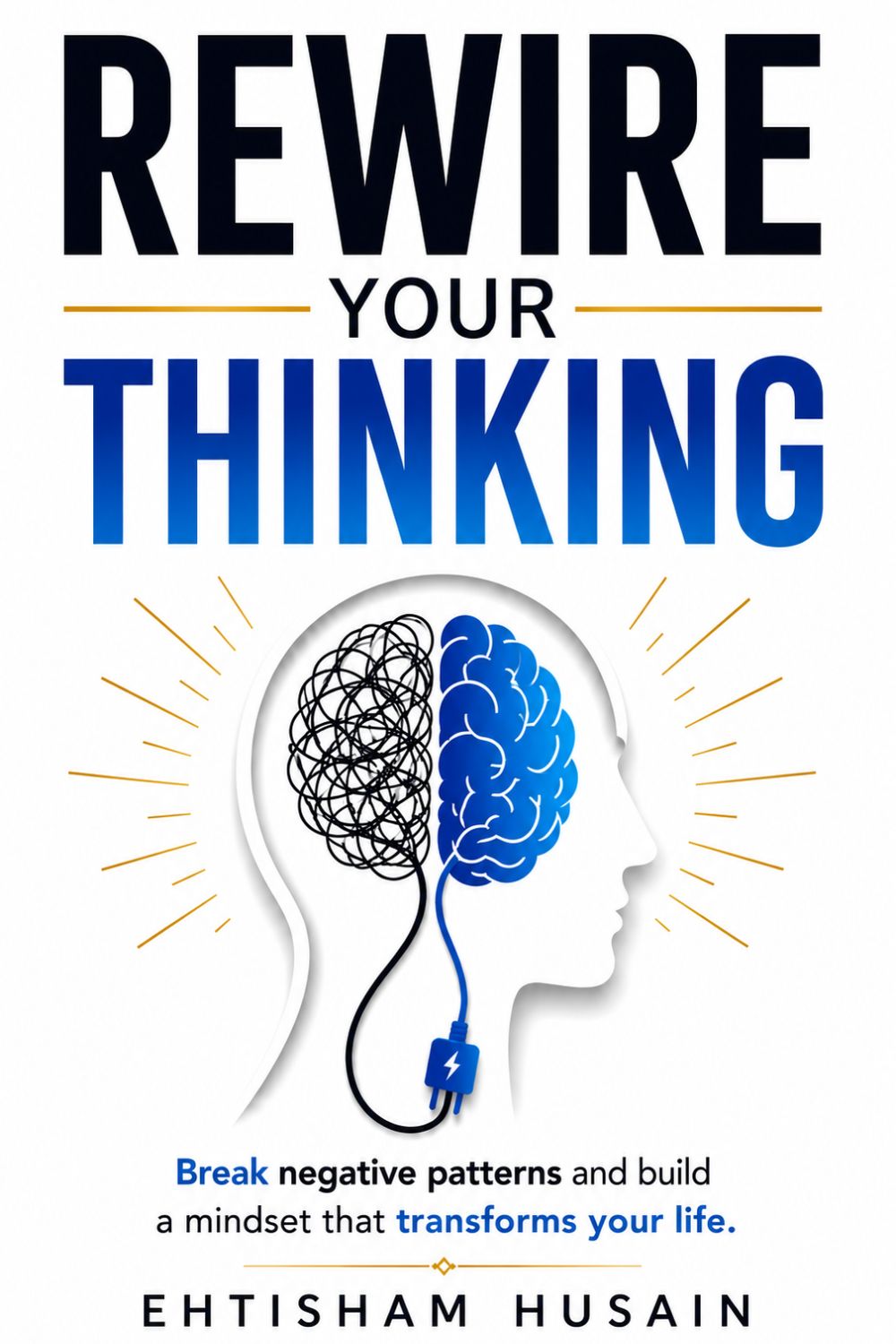
Rewire Your Thinking
Break free from negative thought patterns and discover the power to reshape the way you think, feel, and respond to life. An inspiring guide to transforming limiting thoughts into clarity, confidence, and a more positive direction.

Echoes of the Heart
A poignant collection of three deeply moving narratives on inner conflicts, concealed facts, and emotional warfare that we seldom talk about but certainly experience.
Philosophical Axioms
The four core mental models that shape every line of code written and every book published.
I. The Principle of Latency
Between stimulus and response lies your freedom. Whether managing CPU interrupt routines or human emotional triggers, introducing artificial latency restores executive control.
II. The Invisible Standard
When nobody is inspecting your commit history or book drafts at 3 AM, excellence is an agreement between you and the craft. Clean memory alignment matters even if the user never sees it.
III. Zero-Fluff Pedagogy
Knowledge should never be buried under academic jargon or padded page counts. Explain deep computer systems and psychological models with visceral clarity.
IV. The Digital Garden Ethos
A personal platform should not be a polished trophy room. It must remain an active, living garden—openly sharing the half-formed insights, the errors, and the growth.
The Odyssey Timeline
The Spark Engineer Sanctuary Launch
Unified the systems engineering laboratory, interactive C visualizers, open-access book excerpts, and the live Spark Within diary into a single glassmorphic web garden.
Published 'Rewire Your Thinking' & 'Echoes of the Heart'
Wrote and published dual Kindle volumes breaking down mental feedback loops and exploring the moral depth of empathy through prose.
The Architecture of Low-Level Computing
Began compiling deep-dive technical explorations into C pointers, memory layout structures, deterministic algorithms, and reactive modern frameworks.
The Curiosity of the Unseen Mechanism
Deconstructing physical clocks, exploring raw computer terminals, and writing first reflective prose notebooks in solitude.